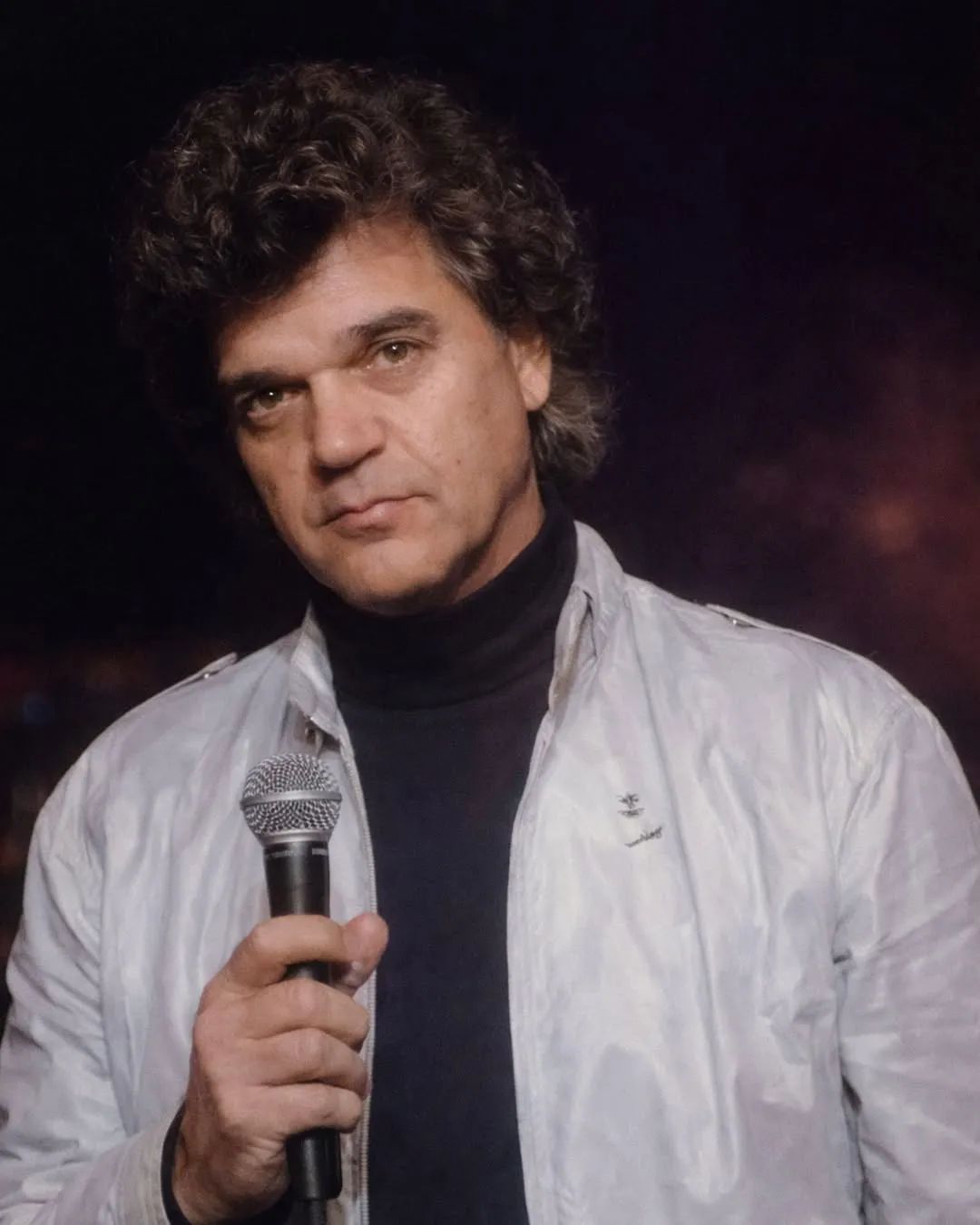
Introduction
The Branson, Missouri of the early 1980s held a particular kind of electricity that only true country music towns could claim. The theaters glowed under warm lights, the crowd buzzed with eager expectation, and people came looking for more than a tune. They wanted to be moved. On nights like that the audience arrived early and settled into their seats quietly, the hush of fans waiting for something they knew would linger in memory. When Conway Twitty stepped into the light, the room already felt like his.
Sing THE CLOWN
At first a handful of voices called out. Then the plea spread until nearly every corner of the house joined in. The crowd kept demanding THE CLOWN because it was one of those songs that hit listeners in a way studio recordings rarely could. The melody carried weight and the words held drama, and Conway Twitty had a way of making even the smallest line register like a confession.
Something slight changed on stage when he heard the repeated request.
He did not hurry to the microphone. He did not flash an immediate grin or wave away the calls with his usual showmanship.
He stopped for a beat.
The pause felt long enough to alter the mood in the room. Silence settled in and the moment took on extra gravity.
Then the band began to play.
The instant the first verse arrived, it did not come across as a performer offering a crowd pleaser. It sounded like someone admitting something that had been kept inside for a long time. In that instant Conway Twitty sang with a sorrow that reached beyond what anyone could see. His voice carried the weight of years of living and losing and finding a way forward. Each line of THE CLOWN drifted through the theater with a slow seriousness, like a recollection unfolding beneath the stage lights.
That quality was part of what set Conway Twitty apart.
He did more than act out heartache. He seemed to have lived it. While many artists presented feeling as spectacle, Twitty delivered it as something authentic. His voice could shrink a full auditorium into a private moment, as if every listener had been quietly invited inside the story.
That night the song felt less like entertainment and more like a reflection.
It mirrored the paradox of performing life. Smiles beamed under bright lights while a different strain of feeling was carried behind the eyes. The lyrics described a man who made others laugh while hiding his own tenderness, and as Conway Twitty moved through each line, there was a haunting sense that the words spoke to more than a fictional figure.
They spoke to the price of standing in the spotlight.
The audience reacted in the usual way. They cheered. They clapped at familiar lines. They celebrated the melody and the skill of a legend delivering the song they wanted to hear.
Yet only a few in the room seemed to notice how fully Twitty inhabited the piece.
Sometimes the most wrenching performances are the ones delivered with the steadiest control.
When the last chord dissolved the theater rose in applause. Conway Twitty did not move right away. For a brief instant he remained still, as if he had not quite returned from the place the song had taken him.
Then he offered a slight nod, gathered himself, and walked slowly toward the wings.
The gesture was small. Quiet. It might have been lost to anyone who was not listening closely.
For those who had been paying attention the moment left a lingering question that remained long after the applause faded.
Were they hearing a performance or were they witnessing Conway Twitty reveal a part of himself that most people never saw