Introduction
Sometimes music steps away from flash and showmanship and finds a quiet place inside people. At the 2026 Grammy Awards such a moment arrived. It was modest in presentation yet immense in feeling. The tribute onstage honored memory and family more than chart history.
This was not about spectacle or engineered nostalgia. It was a brotherly homage, simple in form and rich in feeling. The performance remembered Robin Gibb, whose life ended too soon, and it celebrated the lasting impact of the Bee Gees.
The night began with the usual excited buzz. Celebrities filled the Dolby Theatre, and the evening promised the familiar mix of red carpet glamour and grand musical moments. What followed broke from expectation and settled into the audience’s hearts.
The lights dimmed. One beam warmed the stage. The figure who walked into that hush was unmistakable. Barry Gibb stood there, the last surviving original member of the Bee Gees, a living bridge to decades of music that soundtracked countless lives. His arrival needed no fanfare. He commanded attention simply by being there.
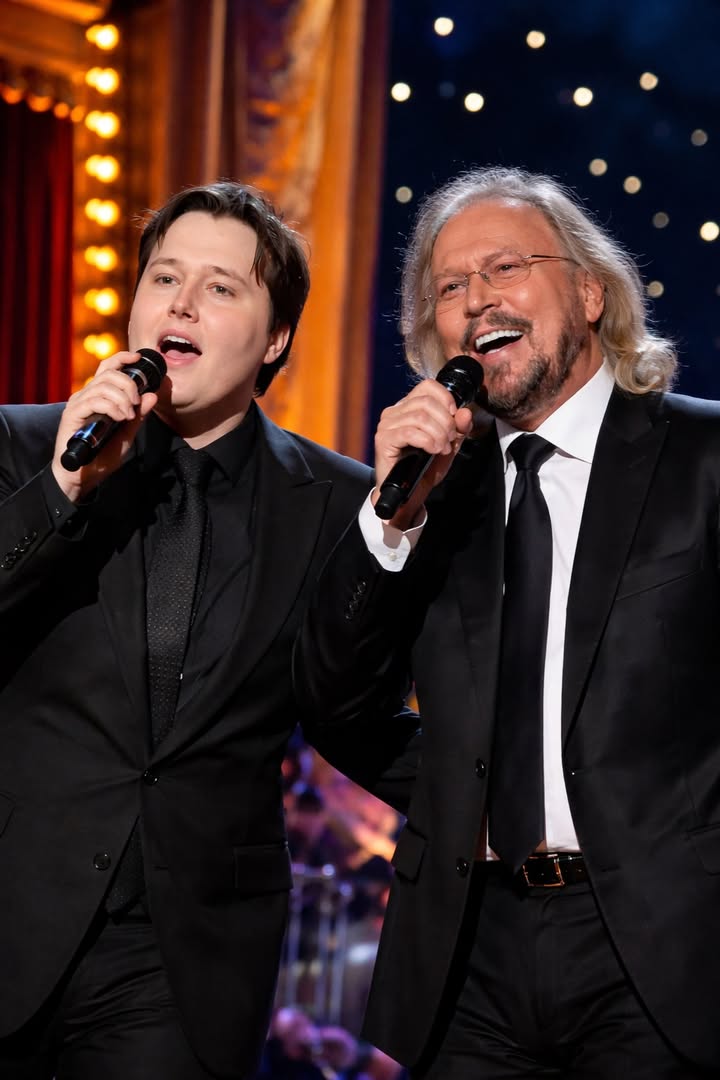
He did not stand alone for long. His son, Robin-John Gibb, soon joined him. The name alone made clear this was more than a guest appearance. This was family onstage, a continuation of a musical story started by a father and his brother. The bond between them was immediately obvious without further explanation.
When Barry Gibb began the opening chords of the classic “How Deep Is Your Love” the room shifted. Time seemed to stretch. The usual award show distractions fell away. There were no flashing screens or background chatter, only the music filling the theater. The familiar melody now carried added layers of grief, remembrance, and familial devotion.
Barry’s voice showed the traces of age, yet it remained steady and purposeful. His delivery felt lived in, each line holding years of history. The rendition did not simply echo what had been. It emerged as something new, shaped by the meeting of his voice with his son’s.
When Robin-John joined, their harmonies wove together naturally. The performance was not an impersonation. It felt like a handover, a living continuation of the Bee Gees legacy. Rather than staging a nostalgic spectacle, they honored a brother who was gone by singing with sincerity.
What made the moment so affecting was its restraint. There were no elaborate lighting tricks, no sweeping orchestral swells to manipulate emotions. It was simply father and son delivering a song from their hearts. The pared-down approach let every note carry real feeling.
The audience seemed invited into an intimate family instant. Grief met grace on that stage, and the music spoke what words alone could not. The performance felt private and communal at the same time, as if the Gibb family was sharing a memory with everyone present.
As the song progressed it became clear that the piece conveyed more than romance. The lyrics that once described longing and devotion took on a broader meaning. The song transformed into a tribute to family, to memory, and to the permanent imprint left by Robin Gibb.
The closing chorus arrived and the theater filled with a hushed reverence. Barry and Robin-John’s voices found a rare alignment, capturing something beyond the arrangement. The moment completed a chapter that began when the Bee Gees first rose to fame decades earlier.
When the final note faded, the audience stayed still for a heartbeat. The applause that followed was quiet and sincere rather than thunderous. It felt like a shared release, an expression of gratitude rather than mere praise for a show.
The performance resonated far beyond the Dolby Theatre. Viewers at home reacted with similar emotion. Social media filled with reflections not about technical skill but about the depth of feeling the performance conveyed. For many it became less about a musical rendition and more about an experience of shared loss and affection.
That night Barry Gibb and Robin-John Gibb offered something that transcended awards and recognition. They delivered a family moment. They honored memory. They showed the strength of a bond that endures.
Ultimately this was more than a performance. It completed a circle. The tribute to Robin Gibb was offered in a way that no gaudy production could match. The Bee Gees legacy persists not just in sales and charts but in the hearts of listeners who grew up with their music.
The 2026 Grammy Awards briefly became a space for remembrance and love. That night served as a reminder of how profound and lasting love can be.
Video