Introduction
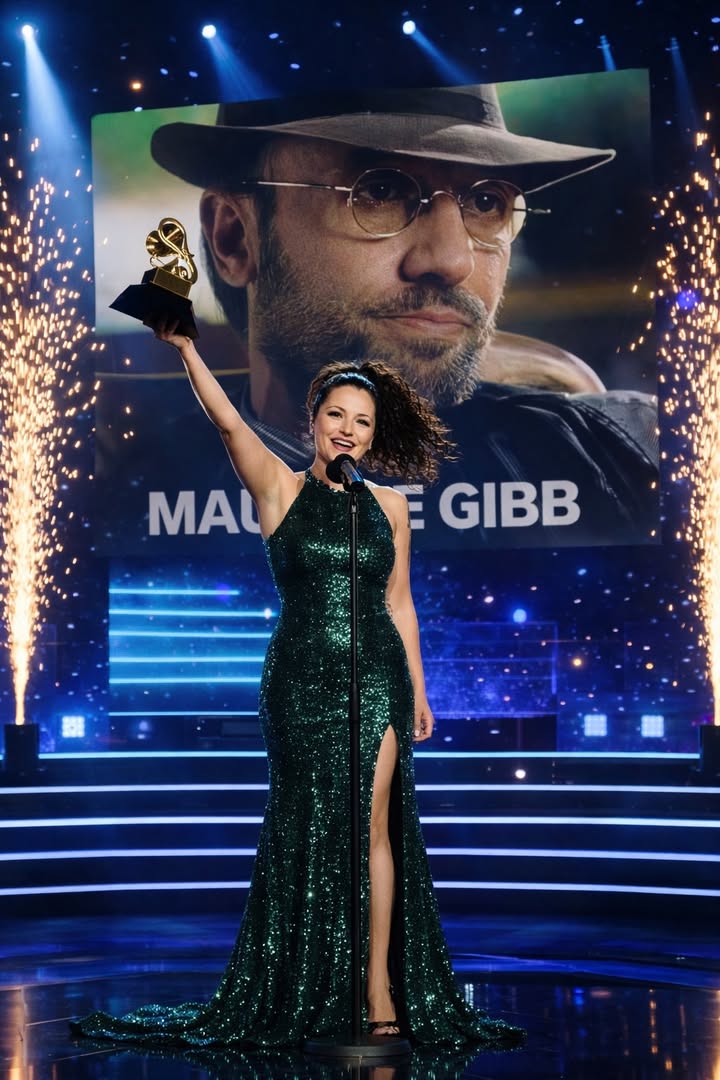
Under the soft glow of the stage lights at the 2026 Grammy Awards, Samantha Gibb stepped forward in a moment that felt both intimate and historic. She was not only collecting an honor, she was carrying a family story into the public eye. The crowd fell quiet as she prepared to speak on behalf of her late father.
Accepting the award for the work of her father, Maurice Gibb, Samantha held the trophy with a reverence that seemed to honor every note he had written. His music with the Bee Gees had threaded through decades and connected listeners across generations. In that pause between lights and applause, it felt as if the past gently met the present through song.
Maurice Gibb was remembered for more than his chart success. His approach to music was a way of living and a belief that songs should reach the heart first. When Samantha moved forward with hands that trembled from feeling rather than nerves, she became a living symbol of the principles he had practiced every day.
Her tribute was understated and sincere. She chose to speak plainly about the soundtracks of her childhood and the small scenes where music shaped their family life. She described evenings when songs would spill from the home and the way melodies settled into ordinary moments. Those memories, she said, were not about fame. They were about making, about honesty, and about closeness.
Music was never just background in our home. It was how we talked with each other. It was the steady beat of our days and the soft glow of our nights.
Her reflections made the room lean in. Samantha explained that her father never pursued recognition for its own sake. He sought truth in every phrase and felt the truest reward was when a song reached someone. For him, the goal was emotional honesty rather than applause. In that instant, the audience could see the human being behind the hits.
Tears appeared on the faces of peers and longtime fans. The standing ovation that followed felt held and respectful. It was not the loud celebration typical of awards night. Instead it was a measured, heartfelt acknowledgment of a life whose work had moved people deeply.
With the award gently raised, Samantha looked over the crowd. Her voice was low when she offered thanks and shared who the honor belonged to. She made clear that the recognition extended beyond family and artist to every listener who had carried those songs through the highs and the lows.
This award is not mine alone. It does not belong only to my father either. It belongs to everyone who found comfort or joy in his music and who let those songs live with them.
The ceremony turned into more than a presentation that night. It became a tribute to a spirit that continues to live inside the music. Though Maurice Gibb is gone, his influence remains present on the air, on playlists, and in the memories of millions. His songs are a brightness that keeps shining.
For Samantha the moment served as a form of reunion. Holding the trophy felt like holding a torch passed down across generations. In accepting it she carried forward the light of her father’s work and the devotion it inspired.
Maurice Gibb stands remembered as an artist of integrity and a source of hope for many. Through Samantha’s words and presence, the Grammys that night became a reminder of the enduring power of a father’s love and the songs that keep reaching people over time.